


Striking the perfect balance: Director’s salary and dividends for 2023/24

Striking the perfect balance: Director’s salary and dividends for 2023/24

As a business owner, determining the ideal salary for company directors can be tricky.

Often, most directors will want to balance their salary and dividend payments to be as tax efficient as possible.

The 2023/24 tax year presents an array of factors to consider, such as income tax thresholds, National Insurance contributions (NICS), and personal tax allowances.

It is important to explore the key considerations that company directors should weigh up when balancing their salaries and dividends.

The tax-free personal allowance

The tax-free personal allowance for the 2023/24 tax year stands at £12,570. By keeping your salary below this threshold, you can avoid paying any PAYE income tax.

However, for every £2 you earn above £100,000, you lose £1 of your personal allowance, meaning it drops to zero once your income reaches £125,140.

National Insurance considerations

Your company will be required to pay 13.8 per cent in Employers’ NICs on salaries exceeding £9,100 per year.

However, the Employment Allowance allows eligible businesses to reclaim up to £5,000 in Employers’ NICs.

To benefit from this, directors must earn at least £9,100, although this does not apply to sole directors without other employees.

You will also need to pay National Insurance personally if your salary is above the Primary Threshold (£12,570 for 2023/24).

Pension and minimum wage concerns

It is essential to consult The Pension Service to understand how your state pension may be affected by your NICs.

If your salary is too low, it may impact your pension entitlement. To secure your entitlement to future state pension and benefits without paying National Insurance, ensure that your salary is above the Lower Earnings Limit (£6,396 for 2023/24).

Additionally, if you have an employment contract with your company, you must pay yourself the National Minimum Wage, which is £10.42 per hour for adults aged 23 or above.

Director’s salary

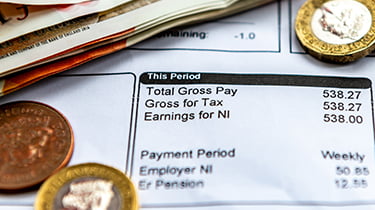
Since 6 April 2023, directors can withdraw a maximum salary of £758 per month without incurring National Insurance charges, assuming no other income is earned.

Also from this date, the first £1,000 of dividends remains tax-free. Beyond that, dividend income is taxed as follows:

  • Basic tax rate – 8.75 per cent
  • Higher tax rate – 33.75 per cent.
  • Additional tax rate (now above £125,140) – 39.35 per cent

Weighing up all of these points above and each director’s pay objectives, you should be able to reach a balance that is tax efficient.

Ensure compliance

HMRC is increasing checks to ensure dividend payments are accurately recorded. To satisfy HMRC and Company law requirements, directors should consider company reserves, cash flow, personal tax situations, and director requirements when determining dividend amounts.

Additionally, directors should hold meetings to decide on dividend amounts and methods of payment, and record minutes to maintain accurate documentation.

If you need advice on remuneration for your directors, please get in touch.

Landlords are latest group targeted by HMRC ‘nudge’ letters

Landlords are latest group targeted by HMRC ‘nudge’ letters

Residential landlords are the latest group to have been targeted in receiving ‘nudge’ letters from HM Revenue & Customs (HMRC).

The letters are part of a targeted ‘nudge’ campaign from HMRC to remind landlords of their obligation to declare their full rental income.

What is a ‘nudge’ letter

HMRC has used what has become known as ‘nudge’ letters since 2017. These communications are designed to prompt a response from the recipient by offering reduced fines for a declaration of unpaid tax.

The method has been used on numerous occasions, issuing them to taxpayers who hold overseas bank accounts and taxpayers who claim non-domicile status.

Nudge letters have also been sent to holders of crypto assets, reminding them that Capital Gains Tax (CGT) may be payable on income gained from the sale or trade of crypto assets.

The letters being sent to landlords suggest they review their tax position and include a certificate of tax position to be completed and returned, typically within 30 days.

Failure to reply could lead to fines, a further investigation or in more serious cases criminal prosecution.

So far 1,000 or so property owners suspected of tax underpayments have been sent a ‘nudge’ letter.

Evidence gathered via online data tracking

The evidence behind these recent approaches was gathered through online booking platforms like Vrbo and Airbnb. These sites are obliged to share data of registered users and their financial transactions.

Issuing the letters is a way to give taxpayers a genuine chance to rectify any discrepancies and pay tax on undeclared income.

Landlords can take out Client Protection Insurance via their accountant, which protects them against the costs of an HMRC investigation.

If you have received a ‘nudge’ letter from HMRC it is important to seek professional advice on the matter.

Need professional advice on property tax issues? Ask our team.

683,000 higher rate taxpayers opt out of child benefit as thresholds remain frozen

683,000 higher rate taxpayers opt out of child benefit as thresholds remain frozen

The High Income Child Benefit Charge (HICBC) was introduced in 2013 and was set up to charge tax on individuals claiming child benefits who were earning a yearly income in excess of £50,000.

The tax charges equate to the following:

  • One per cent of the total Child Benefit received for every £100 earned over £50,000
  • 100 per cent of the total Child Benefit received for individuals earning over £60,000 annually

A decade has now passed since the introduction of the HICBC, and these thresholds have never changed, meaning more and more people are passing beyond the threshold and into the territory of the charges.

Individuals who fall into this category can decide to opt out of receiving child benefits and, therefore, avoid paying the charge.

Unsurprisingly, as the number of workers reaching the threshold has increased, so has the numbers opting out.

As of the year-end of August 2022, 683,000 families had opted out of receiving child benefits due to the HICBC – a figure that has jumped up five per cent from 651,000 in the year before.

Points of tension

A recent debate in parliament highlighted the issue of HICBC and how it was impacting families.

Victoria Atkins, financial secretary to the Treasury, stated that the Government was aware of certain ‘points of tension’, but argued that: “increasing the threshold to more than £50,000 could impact the Government’s spending on public services.”

Should I opt out?

While it seems logical to avoid the HICBC, especially when earning over £60,000 a year, there are certain pitfalls to expect from doing so, namely, the claimants missing out on National Insurance (NI) credits.

These are used to make sure you qualify for certain benefits, including your state pension and the claimant’s child not automatically receiving a National Insurance number. It would be wise to weigh up these factors before deciding to opt out.

For more information and advice about this charge and its obligations on higher earners, contact us today.

What is the Residence Nil-Band Rate? And why does it matter to you?

What is the Residence Nil-Band Rate? And why does it matter to you?

The Residence Nil Band Rate (RNRB) was introduced by the Government in 2017 and benefits families passing on their main property to a direct descendent.

Since its introduction, millions of families around the UK have benefitted from its ability to minimise Inheritance Tax (IHT) bills.

Will the RNRB mean paying less IHT?

As of the 2023/24 tax year, the basic Nil-Rate Band allowance on IHT is £325,000.

The RNRB gives you an additional tax-free allowance of £175,000, where your main property is passed to a direct descendant. This means that the first £500,000 of your estate will be free of IHT.

The current IHT relief thresholds have been frozen at their current level until April 2028.

With house prices rising, this freeze will affect many families who will find themselves increasingly above the thresholds and ultimately paying more tax.

The RNRB will only come into effect if the residences are passed to direct descendants who are defined as:

  • A child, stepchild, grandchild, or other lineal descendant
  • A spouse or civil partner of a lineal descendant (including their widow, widower, or surviving civil partner)
  • An adopted or fostered child
  • A child where they’re appointed as a guardian or special guardian when the child is under 18

Direct descendants do not include nephews, nieces, siblings, and other relatives who are not included in the above list.

Can my RNRB allowance work in addition to my spouse’s?

As with the basic IHT allowance, any unused RNRB allowance will be transferred to an individual’s spouse or civil partner upon their death.

This means that descendants of their spouses will be able to claim a tax-free allowance from both individuals. This totals £650,000 in basic IHT Nil-Rate Band allowance and £350,000 from RNRB. This means that descendants can potentially enjoy £1 million of an estate tax-free, where the right conditions are met.

RNRB on high-value properties

On estates worth £2 million or more, the RNRB allowance will reduce by £1 for every £2 that the estate is worth.

This can also affect the amount of RNRB that can be transferred to a surviving spouse or civil partner, so the correct figures must be calculated.

Maximise your tax savings

To take full advantage of the tax planning opportunities this offers, professional advice should be sought.

For help and advice with IHT and the RNRB, contact us today.

Fiscal drag bites on earners

Fiscal drag bites on earners

Changes to personal tax allowances and higher interest rates have seen a growing number of people being affected by fiscal drag.  

Fiscal drag is the phenomenon where taxpayers are pushed into higher tax brackets due to wage increases as they keep pace with inflation.

With the UK Government freezing most tax bands until 2028, and reducing the threshold on the additional marginal rate, fiscal drag can have a significant impact on the finances of people across different income levels. 

Rising inflation 

Due to rising inflation and to some degree economic growth, wages have risen from £406 a week to £533 on a median basis over the last ten years, according to Money Week.  

It also reported that pay in the private sector, excluding bonuses, rose 6.5 per cent from November 2022 to January 2023.

While these rises may be good news, in reality, they are being eroded by spiralling inflation and the need to pay income tax at higher rates as people enter different tax bands.

Increased tax bills 

According to Money Week, those earning £15,000, £20,000, and £30,000 will see their income rise by 21 per cent, but their tax bills will increase by 106 per cent, 50 per cent, and 32 per cent respectively.

High earners paid over £50,000 are expected to see a 21 per cent increase in wages and a 35 per cent increase in their personal tax bill – adding £1,905 to their tax bill. 

To avoid fiscal drag, people need to carefully manage their income to take advantage of tax reliefs, allowances and tax-efficient investments.

Need advice on personal tax issues? Speak to us today.

Changes to the repayment of Student Loans begin in August

Changes to the repayment of Student Loans begin in August

The way in which Student Loans are repaid is changing and employers need to be prepared.

Currently, graduates and students who have taken out student loans are required to repay their loan when they earn an annual salary of £27,295 or more, with repayments at a rate of nine per cent on any income earned above this threshold. The threshold is then adjusted annually for inflation following the Retail Price Index.

However, starting from the academic year 2023/24 a new student loan plan will be introduced.

Known as Plan 5, the changes affect those taking out loans on or after 1 August 2023.

For these students the threshold will be reduced to £25,000 per year, meaning that graduates will begin repaying their loans when they earn more than this amount.

Repayments will be made at the same nine per cent rate on any income earned above this threshold.

Students on Plan 5 won’t be expected to make repayments to their student loan until April 2026 at the earliest, even if they leave their course early.

The repayment period will also be extended from 30 to 40 years, resulting in a longer repayment period for more graduates to repay their loans in full.

If a person’s income falls below the repayment threshold, their repayments will stop and only restart when their income exceeds the threshold again.

Student Loan Repayment Bands explained

There are a number of student loan repayment bands depending on when people began their course. Students beginning a course on or after 1 August 2023 will be on Plan 5.

This is if they are studying an undergraduate course, Post Graduate Certificate of Education (PGCE), or an Advanced Learner Loan.

They will be on Plan 2 if they started their course between 1 September 2012 and 31 July 2023.

This covers those studying an undergraduate course, PGCE, or who took out an Advanced Learner Loan or a Higher Education Short Course Loan.

Those who started their course before 1 September 2012 will be on Plan 1. Students studying or having studied a postgraduate master’s course will be on a Postgraduate loan.

Want advice on the payroll implications of these changes? Call us today.

P11D – Are you ready to report and pay tax on Benefits in Kind?

P11D – Are you ready to report and pay tax on Benefits in Kind?

Benefits in Kind (BIK) cover a number of different perks or additional payments made by employers to their employees. They can include any of the following:

  • Private Healthcare
  • Loans
  • Company cars
  • Loans
  • Gym memberships
  • And much more.

The above are all taxable benefits, and it is an employer’s responsibility to ensure they are noted on a P11D form, which is submitted on an annual basis to HM Revenue & Customs (HMRC).

It is worth noting that certain expenses should also be added to the P11D form. However, there are many different types of expenses with their own complicated rules, so it is best to seek advice if you are unsure.

The GOV.UK website also has an extensive list of all expenses if you are unsure and need to double-check.

The deadline for submitting P11D forms for the 2022/23 tax year is 6 July 2023.

Obtaining a P11D form

In previous years, P11D forms could be downloaded and filed by post with HMRC, but any submissions now need to be made through the PAYE online service.

In some instances, employers will have all expenses and benefits taxed through their payroll, so there may be no need to fill in a P11D form at all.

Missing the deadline and form errors – Do not pay the price

Penalties can be incurred if you submit your P11D forms beyond the 6 July deadline.

A fine of £100 per 50 employees will be handed out for each month or part month that it is late, with further fines issued if matters aren’t resolved.

It is also important that the P11D form is filled in correctly, as HMRC can fine employers for any information they later find to be inaccurate.

Therefore, it is best to go over P11D forms carefully before submitting them.

For any assistance completing or submitting your P11D forms, including queries about BIK, please contact us today.

Government announces shakeup in the payment of Benefits in Kind

Government announces shakeup in the payment of Benefits in Kind

The Government has announced a shake-up in how Benefits in Kind (BIK) are paid. The move will allow tax agents to run payroll BIK on behalf of clients for the first time.

The Government says it will help to reduce administrative burdens on employers and enable agents to support their clients more effectively.

If an employer provides a taxable benefit, such as the use of a company car, the taxable benefit has to be valued. For most types of BIK, the law sets out how to work out the value, with tax paid on the taxable value of the benefit.

Report expenses

It is currently the duty of employers to report taxable expenses or benefits for employees to HM Revenue & Customers (HMRC) directly through payroll or at the end of the tax year. They are also required to report how much Class 1A National Insurance (NI) is owed on all the expenses and benefits provided and pay any outstanding NI.

The Chancellor announced in the March Budget a move to simplify the tax system for taxpayers and their agents, and will deliver IT systems to enable tax agents to payroll BIKs on behalf of employers.

Agents will be able to report expenses related to company cars, health insurance, travel and entertainment, and childcare.

Digital reporting

HMRC has already confirmed that it will require the minority of digitally capable employers who still submit forms reporting employee benefits and expenses on paper, to use online forms from April 2023.

It will then move to issuing P6 and P9 coding notices solely using digital methods.

Expenses and benefits for each employee do not have to be reported at the end of the tax year if all expenses and benefits are payrolled.

There are penalties for non-compliance if employers carelessly or deliberately give inaccurate information in a tax return that results in not paying enough tax or over-claiming tax reliefs.

Need advice on Benefits in Kind payments and other taxation matters? Contact us.

Be prepared for business rate changes as rateable value update takes effect

Be prepared for business rate changes as rateable value update takes effect

The Valuation Office Agency (VOA) has updated the rateable values of all businesses, and other non-domestic, properties in England and Wales from 1 April 2023.

The Government levies the charge on offices, shops, pubs, and warehouses. In fact, most non-domestic properties will attract business rates. They may also be charged where only part of a building is used for non-domestic purposes.

A Government business rates support package has been put in place worth around £13.6 billion over the next five years.

It includes measures to freeze the business rates multipliers at 49.9p and 51.2p in 2023-24, which, it is claimed, will see bills six per cent lower than they would have been without the freeze.

Changes to business rates in 2023:

  • The multiplier represents the number of pence in each pound of the rateable value that will be payable in business rates before any relief or discounts are applied.
  • A transitional relief scheme will cap bill increases caused by changes in rateable values at the 2023 revaluation.
  • For retail, hospitality, and leisure business rates relief will be increased from 50 per cent to 75 per cent (up to £110,000 per business) in 2023-24.
  • The increases are capped at £600 per year from April 2023 if businesses lose their eligibility for small business rates relief as a result of the revaluation.

The updated values reflect the property market as of 1 April 2021 and, while some sectors benefit, others have been hit hard by the Business Rates Revaluation 2023.

How are business rates calculated?

They will be based on the property’s ‘rateable value’, the estimated value on the open market.

The rateable value for your property is not what you pay in business rates or rent. Your council uses the rateable value to calculate your business rates bill.

What is the Small Business Rates Relief?

This applies if the property has a rateable value of less than £15,000, and generally if the business only uses one property:

  • Full relief is available on properties with a rateable value of £12,000 or less
  • For those between £12,001 and £15,000, relief goes down gradually from 100 per cent to zero per cent

If you’re a small business but you don’t qualify for small business rate relief, your bill will still be worked out using the lower small business multiplier (for properties with a rateable value below £15,000).

Need help with understanding business rates? Contact us today.

How do changes in Corporation Tax affect my business?

How do changes in Corporation Tax affect my business?

Changes to the amount of Corporation Tax (CT) businesses pay came into effect on 1 April.

From that date, the main rate of CT rose from 19 per cent to 25 per cent for the most profitable companies.

Companies whose year-end is 31 March will pay 19 per cent CT for the whole of the 2022/23 period, and then 25 per cent for the whole of the 2023/24 period.

Hybrid rate

However, for companies whose accounting period straddles 1 April, it will be necessary to apportion profits between those that arose up to 31 March and those that arose after 1 April.

Generally, the effective amount of Corporation Tax due will, however, rely on the taxable profits your company makes as follows:

  • Small companies with profits of up to £50,000 will pay CT at 19 per cent
  • Companies with profits of £250,000 and over will pay CT at 25 per cent
  • Companies with profits over £50,000 but under £250,000 will pay on a sliding scale of between 19 per cent and 25 per cent.

Where companies have taxable profits between these two thresholds it is more complex as the rate of tax they pay will depend on their level of profit.

This is due to Marginal Rate Relief (MRR). This is a tapered relief, which increases in line with a company’s profits.

The basic method used by HM Revenue & Customs (HMRC) to calculate this relief is quite complex, so seek advice from your professional adviser.

Need advice on the rise in Corporation Tax and related matters? Contact us.