







If businesses feel as though they are paying more tax than ever, there is a reason for that.
Businesses bear the brunt of nearly £1 trillion tax bill – Are they able to handle the extra costs?

If businesses feel as though they are paying more tax than ever, there is a reason for that.
A significant but widely overlooked change took effect on 6 April 2026, placing new legal duties on all employers regarding how they record annual leave and pay.
Making Tax Digital (MTD) for Income Tax is in full swing, but there is still confusion in the air over who is exempt from these requirements.
HMRC has sent out a message to some of the 12 million people with Self Assessment tax accounts in the last week or so, alerting them to the need to file their next Self Assessment tax return.
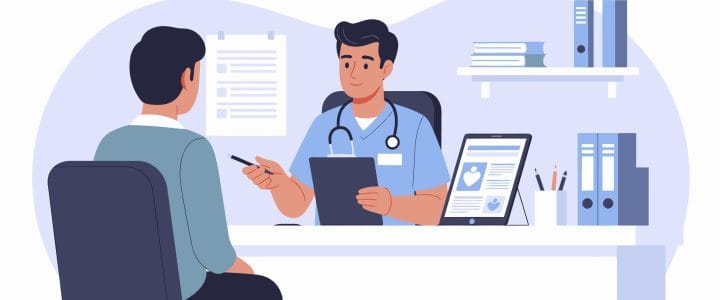
Many employers are on the lookout for new means to attract talent to their business in an increasingly competitive labour market, but many aren’t aware of annual health screenings and their tax-efficient benefits.

From 1 April 2029, all VAT-registered businesses will need to change the way that invoices are handled.

The new tax year has recently begun and it is a time when businesses and individuals will need to review their position to ensure that they are not caught out by shifting rules and fiscal drag.
It is also the time to look back on how taxes were handled in the previous year and this might come with a sinking feeling that something is not quite right.
If you spot an error in how you calculated your tax and fear that you may have underpaid, then it is vital you understand what to do now.
Underpaying tax is an issue that can affect both businesses and individuals alike.
Larger businesses tend to be more compliant as they utilise accounting experts to ensure that they keep pace with new tax regulations as they get introduced and have dedicated teams crunching the numbers. SMEs historically struggle to keep up with tax requirements, with HMRC noting that the tax gap for small businesses Corporation Tax is 40.1 per cent of the small businesses theoretical Corporation Tax liability, or £14.7 billion in absolute terms, in the 2023 to 2024 tax year.
For individuals, dividend tax and stamp duty land tax seem to be areas that frequently make the news for their seeming difficulty in paying accurately.
In both instances, the errors are often attributed to a lack of understanding of how the tax system works or the reliance on dubious advice.
Where you become aware of having underpaid tax, you should not view this as a victory over HMRC, as they will discover the error on their own terms eventually.
Instead, it is vital that you make a voluntary disclosure at the earliest possible opportunity.
By owning up to your mistake, you will show honesty and integrity that HMRC appreciate and they will be less likely to pursue severe action against you.
HMRC’s Digital Disclosure Service (DDS) will generally be the best course of action to manage any reports of underpaid tax, but if you are a business owner who suspects that fraud may have occurred, then it may be better to use HMRC’s Contractual Disclosure Facility (CDF).
The CDF will allow you to alert HMRC to the crime without implicating yourself – unless it comes to light that you were directly involved in it.
The new tax year is a chance for a fresh start as you get another chance to submit all of your annual requirements.
Seeking professional financial support is imperative in ensuring accuracy, particularly if your estate or business is complex.
Small businesses and individuals often try to power through without expert help and this results in the situations we have discussed here.
Instead of rolling the dice and hoping that you get things right, our expert team can review your tax obligations so that you can pay what you owe when you owe it.
Beyond this, seeking professional support may help you to lower your tax bill as you become aware of reliefs and more tax-efficient structures that may otherwise have passed you by.
Tax does not need to be difficult and should not cause you to become stressed about the accuracy of your bills.
Speak to our team for confidence in managing your tax obligations.

As the conflict in the Middle East disrupts the global economy, many businesses are eyeing their energy bills with dread.
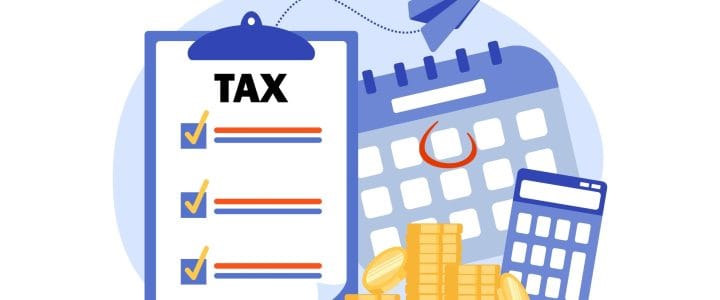
We are officially a few days into the 2026/27 tax year and directors need to be positive on how the latest reforms affect them.

HMRC and Companies House have confirmed that from 1 April, all businesses must use compliant, commercial software to file their company’s tax returns.
As of 31 March, the free joint online service, commonly known as the CATO portal, from these two Government bodies has been removed and you must now use software to file company tax returns to HMRC.
For the time being, you will still be able to file annual accounts at Companies House using third-party software, WebFiling services or paper filing.
The decision has been made to end this service as it is “outdated and no longer aligns with modern digital standards”, according to Companies House.
This change is in line with the introduction of the Economic Crime and Corporate Transparency Act, which implemented “enhanced corporation tax requirements and changes to UK company law.”
It also follows on from a major IT security breach at Companies House, identified in March 2026, that exposed the WebFiling system and allowed some users to potentially access and amend the details of other companies.
Although the breach has now been resolved and security strengthened, it has raised concerns about the reliability of GOV.UK One Login service.
Can you still amend previous returns using the free service?
HMRC and Companies House have confirmed that now that the free filing service has closed, company directors will have to use commercial tax software if they need to make changes to a previously submitted Corporation Tax return or refile a rejected return.
From now onwards, any previously filed financial information will no longer be available in the system, as it has not been retained and will need to be entered again.
HMRC has said that, for amendments, it will also be acceptable to send a paper return to the Corporation Tax Services office.
If you have previously filed financial accounts with Companies House and you want to make changes or corrections, this will also need to be done via commercial software or by sending paper accounts to Companies House via post.
Are there any exceptions to this new rule?
Companies can file a paper Corporation Tax return only in limited circumstances, such as if they wish to submit it in Welsh or can demonstrate a valid, reasonable excuse to HMRC. Otherwise, returns must be filed online using commercial software.