








The men’s football World Cup gets underway on 11 June, sparking a wave of office sweepstakes across the globe.
Fighting football fever – Will extra sick days spoil your summer?
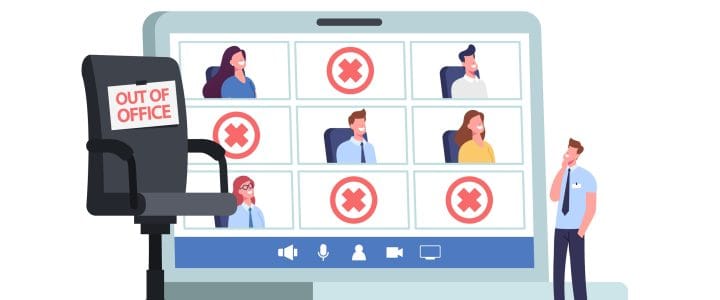
The men’s football World Cup gets underway on 11 June, sparking a wave of office sweepstakes across the globe.

Following months of delays and uncertainty, the Government has confirmed that small businesses in the UK will be required to file balance sheet and profit and loss (P&L) accounts with Companies House.

Two men have been arrested in East London after allegedly running a TikTok tax scam leading HMRC to block £153 million in repayment claims.

It was warned by many businesses that rising National Insurance Contributions (NICs) and wages would combine with operational costs to make recruitment more difficult.
National Bike Week returns once again from 8 – 14 June 2026 and celebrates the power of pedalling across the UK.

Rumours were flying this week that HMRC announced a 22 per cent tax on your ISA if you are holding uninvested cash. This has since been described by the treasury as ‘nonsense’.

Do you know what your Personal Savings Allowance is?
While most taxpayers in the UK will know the thresholds for Income Tax, a worrying few know the way in which personal savings can be subject to tax.
With ISAs set for a significant overhaul, understanding the less tax-efficient saving options will soon be more important.
How much tax do you pay on your savings?
While your savings are not taxed, any interest generated by those savings could be subject to tax if it exceeds your Personal Savings Allowance.
Depending on the rate of Income Tax you pay, your Personal Savings Allowance will differ.
The thresholds are:
ISAs remain the more tax-efficient saving strategy as the interest generated from them is tax-free.
It is therefore most effective to utilise the full £20,000 saving limit for an ISA as early in the tax year as possible to benefit the most from the accumulation of interest.
How should tax on savings be managed?
The main issue is that tax on savings is often overlooked, resulting in HMRC taking action for underpaid taxes.
This will often manifest in a charge through PAYE, as employees are more likely to overlook this obligation.
Those filing Self Assessment tax returns should already be declaring interest earned, so any compliance issue in that group points to a wider problem with handling tax obligations.
When attempting to make the most of saving strategies, it is best to seek professional financial advice.
This will be more important if the saving limit for Cash ISAs falls to £12,000 for under-65s in 2027 as proposed, leaving younger savers to have to find new ways to grow their wealth.
Our professional team can help you to determine an effective saving strategy that suits your financial goals while helping you to be mindful of the tax obligations that you may face.
We do not want to see anyone caught off-guard by an unexpected tax bill and understanding your exposure is vital for preventing this.
Get in touch with our team to regain confidence in your saving strategy.
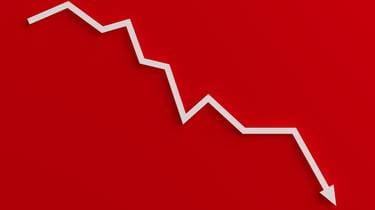
Weak economic growth and tighter regulations on lenders are to blame for the largest drop in bank lending to UK businesses in 30 years, according to new data.
A study conducted by Boston Consulting Group showed British bank loans to companies outside of the finance sector fell to 59 per cent of UK Gross Domestic Product (GDP) in the third quarter of last year.
Back in 2008, before the financial crash, bank loans were roughly 90 per cent of GDP.
Small and Medium-sized Enterprises (SMEs) have been disproportionately affected by this dip in lending.
How have SMEs been affected by a fall in loans?
SMEs make up 99.9 per cent of all UK businesses and Bank of England data shows that SME-specific lending has almost halved over the last 15 years. It now sits at a 30-year low of 6.5 per cent of GDP in 2026.
Traditional banks are favouring SMEs that have physical capital they can repossess if the SME defaults on a loan, placing knowledge-based SMEs at a disadvantage.
Insolvency rates are also rising. Without the safety net of bank overdrafts or bridge loans, a late payment from a major client can now escalate into forced insolvency.
Why don’t banks want to loan to Small and Medium-sized Enterprises?
Banks have moved away from broader SME lending, which carries higher risks and offers lower profits due to the work that is needed to perform due diligence on smaller businesses.
Instead, the banks have turned to lending more within specific sectors, such as property, with real estate SMEs now receiving 51 per cent of all loans.
Banks have also reported that the demand for loans has gone down due to weak economic growth. However, SMEs say they are less likely to apply for a loan because of a fear of rejection.
It is worth remembering that bank loans are not the only way to finance an SME and seeking professional financial support is vital for understanding your options.

When Rachel Reeves announced a temporary cut in VAT from 20 per cent to five per cent for family attractions and children’s dining over the summer holidays, the hospitality and leisure sectors broadly welcomed it.
The scheme runs from 25 June to 1 September and is funded, according to the Treasury, by closing a tax loophole used by oil and gas companies with overseas operations.
On the surface, this looks like good news worth welcoming.
However, for the businesses applying the new rules, the reality of delivering the rate cut is more complicated than the headlines suggest.
The rules shift from one service to the next
How the cut works depends heavily on what is being sold. Admission tickets to amusement parks, water parks, zoos, museums, soft play and similar venues qualify, as do children’s and family tickets to cinemas, theatres and concerts. However, pay-per-ride attractions do not.
Children’s meals only qualify when served from a clearly marketed, separate children’s menu.
A smaller portion of an adult dish does not count, nor does a discounted adult meal or a takeaway. Season tickets and annual passes are generally excluded too.
The result is that many businesses will apply two VAT rates at once on the same bill.
Tills, accounting systems and front-of-house staff all need to handle that from day one, then revert again from 1 September.
This adds an additional layer of complexity to VAT reporting that businesses need to consider right away.
Encouraged, but not required
The Government has urged businesses to pass the saving on to customers and the Competition and Markets Authority has new anti-profiteering powers to prevent unethical activity.
Even so, there is no legal obligation to lower prices at the till and many businesses will weigh up rebuilding margin, reinvesting and matching competitors before deciding exactly what savings to offer to consumers.
Given the wider cost challenges that businesses currently face, the scheme may not deliver the lift at the till that many customers are expecting.
Right idea, wrong season?
There is also a question of timing. The scheme targets the period when families already spend most on days out and when operators are near capacity.
A cut would arguably do more for businesses in the quieter autumn and winter months. As designed, it looks more like household support than business stimulus.
Any support for the sector is welcome, provided businesses seek the expert guidance required to manage obligations and make the most of any new opportunities.

Inheritance Tax (IHT) is paid on all items of your estate after you pass away if you exceed certain thresholds.
Whilst many people focus on their savings, properties and investments, the items you own, commonly referred to as personal chattels, are also included in the calculation of the estate’s value.
There has been a growing trend in recent years for people to invest in luxury goods, including cars, watches, jewellery and handbags, instead of or alongside more mainstream forms of investments, like stocks and shares.
However, many may not realise the impact that this has on their own estate, especially if the value of these assets increases significantly.
What is Inheritance Tax?
Often referred to as a “death tax” by the press, IHT is a tax on the estate, money, property and possessions of someone who has passed away.
In the UK, the standard tax-free threshold, known as the Nil-Rate Band (NRB), provides each individual with £325,000 of IHT-free assets.
On top of this, homeowners benefit from the Residence Nil-Rate Band (RNRB), which is a further £175,000 allowance if you leave your main home to a direct descendant, such as a child or grandchild.
Subject to other tax reliefs, such as Business Property Relief or Agricultural Property Relief, everything above these thresholds is taxed at a rate of 40 per cent.
A spouse can transfer any unused NRB or RNRB to the surviving spouse, which means a couple can pass on up to £1 million tax-free under the right circumstances.
As mentioned, all assets in the estate are included in your IHT calculations. This includes any classic cars, jewellery and handbags.
Unlike Capital Gains Tax, there is no general low-value exemption for personal chattels under IHT, so even modest items can form part of the estate’s overall value.
Are there ways to protect my luxury collections from Inheritance Tax?
There is a possibility that IHT could be waived on luxury collections if you are willing to part with them at least seven years before you die, thanks to the seven-year gifting rule.
This means providing clear evidence that the asset was passed on. Whilst you may be able to admire your collection from afar, you won’t be able to continue to personally possess it.
Gifted assets must be kept with the individual to whom they were gifted, as holding onto them causes them to be known as a gift with reservation of benefit and does not limit IHT exposure.
In some circumstances, you can pay a market-rate rent to use the items after making the gift, though this must be regularly reviewed to remain at market value. This approach requires careful consideration and advice.
Seeking expert support is always wise when planning your estate, regardless of how you intend to reduce IHT exposure.