


Roadside charging – How to account for credit card payments

Roadside charging – How to account for credit card payments

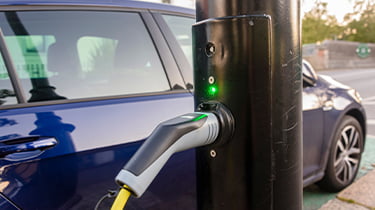
With a growing number of company car owners using electric vehicles, many are deciding or being permitted to use company credit cards to pay for roadside charging.

However, what are the implications of this for the employee and business alike?

While the answer is fairly technical, the short simple answer is there will be no taxable benefit on the employee and no National Insurance Contribution (NIC) charge.

This is because a credit card is a credit token, not a specific means or facility for providing the electricity to charge the vehicle, and it is, therefore, exempt under Section 269 of ITEPA (Income Tax (Earnings and Pension) Act) 2003.

At the moment, electricity is not a fuel for fuel benefit purposes either, this further prevents there being a benefit under ITEPA.

To make matters more complex, this should not be confused with the provision of electricity by an employer via a workplace charging point, which is also exempt from a Benefit in Kind charge under a different section of the same Act, which accounts for the facilitation of electric charging under the fuel benefit rules.

When it comes to the NIC, a liability for Class 1 contributions exists where the credit card is paying liabilities for the benefit of the earner.

However, this is counteracted by other legislation that ensures that no Class 1 NIC arises on business expenses or where “a strange pre-purchase performance is given by the employee whereby the employee informs the seller that they are purchasing the goods or services on behalf of their employer.”

Confusing and seemingly contradictory, this has been established in prior case law, which found that when informing the seller that the fuel is being acquired on behalf of the employer, implies a shift in the purchasing dynamic.

Instead of personally buying the fuel, the employee assumes the role of an agent for the employer.

By procuring the electricity on the company’s behalf, they are no longer utilising the corporate credit card to settle a personal responsibility. Rather, they are being supplied with fuel by their employer.

This area of tax and National Insurance legislation is constantly changing and so if you have any queries about the potential charges related to company cars or their “refuelling” it is best to seek professional advice. To find out how we can support you with this, please contact us.


Car vs Van – Tax treatment of electric vehicles

Car vs Van – Tax treatment of electric vehicles

There have been several important tax decisions previously regarding the difference between vans and cars, but how do the different rules regarding electric vans affect their tax treatment?

Let’s use a hypothetical:

A Ltd has acquired a new electric company van that its director, Bob, uses to go to and from work, as well as during the regular workday.

However, Bob also has the van in the evening and at the weekend for his private use. For Benefit in Kind (BiK) purposes, the company classes the vehicle as an electric van.

Unlike company cars, the BiK charge for an electric van is nil. Therefore, employees with electric company vans can, where permitted to do so by their employer, use their company van for unrestricted private use without any associated tax charge.

Unfortunately, HMRC disagrees with this judgement and argues that the van, is in fact, an electric car and not a “goods vehicle”, as defined by Section 115 ITEPA (Income Tax (Earnings and Pension) Act) 2003.

This states:
(1) In this Chapter— “car” means a mechanically propelled road vehicle which is not:
(a) a goods vehicle,
(b) a motorcycle,
(c) an invalid carriage, or
(d) a vehicle of a type not commonly used as a private vehicle and unsuitable to be so used;
“van” means a mechanically propelled road vehicle which:
(a) is a goods vehicle, and
(b) has a design weight not exceeding 3,500 kilograms, and which is not a motorcycle.
(2) For the purposes of subsection (1)…
“goods vehicle” means a vehicle of a construction primarily suited for the conveyance of goods or burden of any description;

In reaching such a decision, HMRC would need to prove that the van in question had multiple purposes, beyond just the transport of goods.

Many modern vans have been designed and are advertised as multipurpose vehicles, and there are a number on the market that have crew cabs or “kombi” roles, that allow for passengers as well as goods.

This confusing situation has been tested many times, not least in the case of Payne, C Garbett, Coca-Cola European Partners GB Ltd v HMRC at the Court of Appeal on 20 July 2020.

In this case, HMRC was able to prove that the VW Transporter T5 Kombi and Vauxhall Vivaro vehicles provided by Coca-Cola to employees were not vans, and instead served the purpose of being a car.

Examples and cases such as this can make it difficult for companies to find the most tax-efficient fleet of vehicles and can make the choice of vans and cars more complicated.

If you are looking to purchase new vehicles for your business, it is important to seek expert advice. Contact us to find out more.

Businesses must get to grips with a Government crackdown on fraud committed by employees

Businesses must get to grips with a Government crackdown on fraud committed by employees

A new ‘failure to prevent fraud’ offence is being introduced by the Government to encourage businesses to do more to deter offending, which will ultimately protect themselves, consumers, and other businesses.

The new legislation, which is likely to come into force by the end of 2024, will make it easier to prosecute a large organisation if an employee commits fraud for the organisation’s benefit.

Larger organisations in the firing line

The new legislation, being introduced in the Economic Crime and Corporate Transparency Bill, will target a wide range of large businesses across all sectors, including not-for-profit organisations such as charities and incorporated public bodies.

A large organisation is defined (using the standard Companies Act 2006 definition) as organisations meeting two out of three following criteria:

  • More than 250 employees
  • More than £36 million turnover
  • More than £18 million in total assets

Potential penalties

A business could face legal action under the new legislation if, for example, employees were selling products to a customer under false pretences, or falsified accounts to mislead investors.

The business in these scenarios could receive an unlimited fine if it is found to not have reasonable fraud prevention procedures in place.

These severe penalties are seen to encourage businesses to clamp down on fraudulent activities within their organisation.

SMEs still bound by fraud legislation

The above thresholds mean that small and medium-based enterprises (SMEs) will be exempt from the new offence, but they will remain accountable under the existing legal framework. These thresholds can be amended in the future through secondary legislation if necessary.

Small and medium enterprises are often the businesses that fall foul of fraud committed by larger organisations so they may benefit from the greater protection that the new legislation will bring.

What you need to do

If your business falls below the thresholds mentioned above, then while it is important to keep an eye on the existing legal framework, your organisation should not be impacted all that much.

If your business is in this scope, then it is of vital importance to ensure you have the necessary fraud prevention measures in place.

Need help with fraud prevention or advice on the new legislation? Contact us today.

Striking the perfect balance: Director’s salary and dividends for 2023/24

Striking the perfect balance: Director’s salary and dividends for 2023/24

As a business owner, determining the ideal salary for company directors can be tricky.

Often, most directors will want to balance their salary and dividend payments to be as tax efficient as possible.

The 2023/24 tax year presents an array of factors to consider, such as income tax thresholds, National Insurance contributions (NICS), and personal tax allowances.

It is important to explore the key considerations that company directors should weigh up when balancing their salaries and dividends.

The tax-free personal allowance

The tax-free personal allowance for the 2023/24 tax year stands at £12,570. By keeping your salary below this threshold, you can avoid paying any PAYE income tax.

However, for every £2 you earn above £100,000, you lose £1 of your personal allowance, meaning it drops to zero once your income reaches £125,140.

National Insurance considerations

Your company will be required to pay 13.8 per cent in Employers’ NICs on salaries exceeding £9,100 per year.

However, the Employment Allowance allows eligible businesses to reclaim up to £5,000 in Employers’ NICs.

To benefit from this, directors must earn at least £9,100, although this does not apply to sole directors without other employees.

You will also need to pay National Insurance personally if your salary is above the Primary Threshold (£12,570 for 2023/24).

Pension and minimum wage concerns

It is essential to consult The Pension Service to understand how your state pension may be affected by your NICs.

If your salary is too low, it may impact your pension entitlement. To secure your entitlement to future state pension and benefits without paying National Insurance, ensure that your salary is above the Lower Earnings Limit (£6,396 for 2023/24).

Additionally, if you have an employment contract with your company, you must pay yourself the National Minimum Wage, which is £10.42 per hour for adults aged 23 or above.

Director’s salary

Since 6 April 2023, directors can withdraw a maximum salary of £758 per month without incurring National Insurance charges, assuming no other income is earned.

Also from this date, the first £1,000 of dividends remains tax-free. Beyond that, dividend income is taxed as follows:

  • Basic tax rate – 8.75 per cent
  • Higher tax rate – 33.75 per cent.
  • Additional tax rate (now above £125,140) – 39.35 per cent

Weighing up all of these points above and each director’s pay objectives, you should be able to reach a balance that is tax efficient.

Ensure compliance

HMRC is increasing checks to ensure dividend payments are accurately recorded. To satisfy HMRC and Company law requirements, directors should consider company reserves, cash flow, personal tax situations, and director requirements when determining dividend amounts.

Additionally, directors should hold meetings to decide on dividend amounts and methods of payment, and record minutes to maintain accurate documentation.

If you need advice on remuneration for your directors, please get in touch.

Landlords are latest group targeted by HMRC ‘nudge’ letters

Landlords are latest group targeted by HMRC ‘nudge’ letters

Residential landlords are the latest group to have been targeted in receiving ‘nudge’ letters from HM Revenue & Customs (HMRC).

The letters are part of a targeted ‘nudge’ campaign from HMRC to remind landlords of their obligation to declare their full rental income.

What is a ‘nudge’ letter

HMRC has used what has become known as ‘nudge’ letters since 2017. These communications are designed to prompt a response from the recipient by offering reduced fines for a declaration of unpaid tax.

The method has been used on numerous occasions, issuing them to taxpayers who hold overseas bank accounts and taxpayers who claim non-domicile status.

Nudge letters have also been sent to holders of crypto assets, reminding them that Capital Gains Tax (CGT) may be payable on income gained from the sale or trade of crypto assets.

The letters being sent to landlords suggest they review their tax position and include a certificate of tax position to be completed and returned, typically within 30 days.

Failure to reply could lead to fines, a further investigation or in more serious cases criminal prosecution.

So far 1,000 or so property owners suspected of tax underpayments have been sent a ‘nudge’ letter.

Evidence gathered via online data tracking

The evidence behind these recent approaches was gathered through online booking platforms like Vrbo and Airbnb. These sites are obliged to share data of registered users and their financial transactions.

Issuing the letters is a way to give taxpayers a genuine chance to rectify any discrepancies and pay tax on undeclared income.

Landlords can take out Client Protection Insurance via their accountant, which protects them against the costs of an HMRC investigation.

If you have received a ‘nudge’ letter from HMRC it is important to seek professional advice on the matter.

Need professional advice on property tax issues? Ask our team.

683,000 higher rate taxpayers opt out of child benefit as thresholds remain frozen

683,000 higher rate taxpayers opt out of child benefit as thresholds remain frozen

The High Income Child Benefit Charge (HICBC) was introduced in 2013 and was set up to charge tax on individuals claiming child benefits who were earning a yearly income in excess of £50,000.

The tax charges equate to the following:

  • One per cent of the total Child Benefit received for every £100 earned over £50,000
  • 100 per cent of the total Child Benefit received for individuals earning over £60,000 annually

A decade has now passed since the introduction of the HICBC, and these thresholds have never changed, meaning more and more people are passing beyond the threshold and into the territory of the charges.

Individuals who fall into this category can decide to opt out of receiving child benefits and, therefore, avoid paying the charge.

Unsurprisingly, as the number of workers reaching the threshold has increased, so has the numbers opting out.

As of the year-end of August 2022, 683,000 families had opted out of receiving child benefits due to the HICBC – a figure that has jumped up five per cent from 651,000 in the year before.

Points of tension

A recent debate in parliament highlighted the issue of HICBC and how it was impacting families.

Victoria Atkins, financial secretary to the Treasury, stated that the Government was aware of certain ‘points of tension’, but argued that: “increasing the threshold to more than £50,000 could impact the Government’s spending on public services.”

Should I opt out?

While it seems logical to avoid the HICBC, especially when earning over £60,000 a year, there are certain pitfalls to expect from doing so, namely, the claimants missing out on National Insurance (NI) credits.

These are used to make sure you qualify for certain benefits, including your state pension and the claimant’s child not automatically receiving a National Insurance number. It would be wise to weigh up these factors before deciding to opt out.

For more information and advice about this charge and its obligations on higher earners, contact us today.

What is the Residence Nil-Band Rate? And why does it matter to you?

What is the Residence Nil-Band Rate? And why does it matter to you?

The Residence Nil Band Rate (RNRB) was introduced by the Government in 2017 and benefits families passing on their main property to a direct descendent.

Since its introduction, millions of families around the UK have benefitted from its ability to minimise Inheritance Tax (IHT) bills.

Will the RNRB mean paying less IHT?

As of the 2023/24 tax year, the basic Nil-Rate Band allowance on IHT is £325,000.

The RNRB gives you an additional tax-free allowance of £175,000, where your main property is passed to a direct descendant. This means that the first £500,000 of your estate will be free of IHT.

The current IHT relief thresholds have been frozen at their current level until April 2028.

With house prices rising, this freeze will affect many families who will find themselves increasingly above the thresholds and ultimately paying more tax.

The RNRB will only come into effect if the residences are passed to direct descendants who are defined as:

  • A child, stepchild, grandchild, or other lineal descendant
  • A spouse or civil partner of a lineal descendant (including their widow, widower, or surviving civil partner)
  • An adopted or fostered child
  • A child where they’re appointed as a guardian or special guardian when the child is under 18

Direct descendants do not include nephews, nieces, siblings, and other relatives who are not included in the above list.

Can my RNRB allowance work in addition to my spouse’s?

As with the basic IHT allowance, any unused RNRB allowance will be transferred to an individual’s spouse or civil partner upon their death.

This means that descendants of their spouses will be able to claim a tax-free allowance from both individuals. This totals £650,000 in basic IHT Nil-Rate Band allowance and £350,000 from RNRB. This means that descendants can potentially enjoy £1 million of an estate tax-free, where the right conditions are met.

RNRB on high-value properties

On estates worth £2 million or more, the RNRB allowance will reduce by £1 for every £2 that the estate is worth.

This can also affect the amount of RNRB that can be transferred to a surviving spouse or civil partner, so the correct figures must be calculated.

Maximise your tax savings

To take full advantage of the tax planning opportunities this offers, professional advice should be sought.

For help and advice with IHT and the RNRB, contact us today.

Fiscal drag bites on earners

Fiscal drag bites on earners

Changes to personal tax allowances and higher interest rates have seen a growing number of people being affected by fiscal drag.  

Fiscal drag is the phenomenon where taxpayers are pushed into higher tax brackets due to wage increases as they keep pace with inflation.

With the UK Government freezing most tax bands until 2028, and reducing the threshold on the additional marginal rate, fiscal drag can have a significant impact on the finances of people across different income levels. 

Rising inflation 

Due to rising inflation and to some degree economic growth, wages have risen from £406 a week to £533 on a median basis over the last ten years, according to Money Week.  

It also reported that pay in the private sector, excluding bonuses, rose 6.5 per cent from November 2022 to January 2023.

While these rises may be good news, in reality, they are being eroded by spiralling inflation and the need to pay income tax at higher rates as people enter different tax bands.

Increased tax bills 

According to Money Week, those earning £15,000, £20,000, and £30,000 will see their income rise by 21 per cent, but their tax bills will increase by 106 per cent, 50 per cent, and 32 per cent respectively.

High earners paid over £50,000 are expected to see a 21 per cent increase in wages and a 35 per cent increase in their personal tax bill – adding £1,905 to their tax bill. 

To avoid fiscal drag, people need to carefully manage their income to take advantage of tax reliefs, allowances and tax-efficient investments.

Need advice on personal tax issues? Speak to us today.